
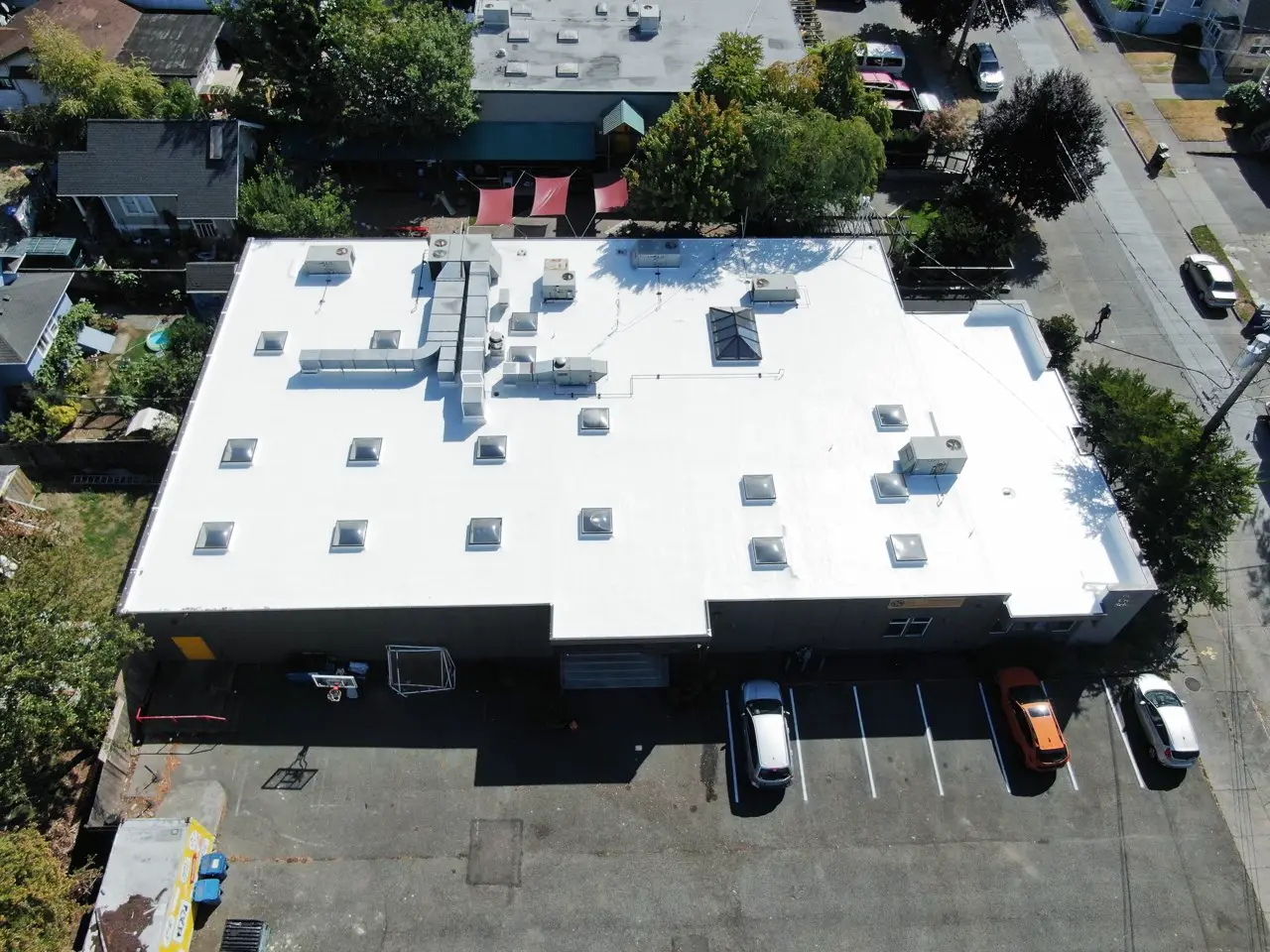
Commercial roofing for K-12 schools, private academies, and educational campuses.
Des Moines Independent Community School District is the largest school district in Iowa, serving more than 32,000 students across a building portfolio that spans historic early-twentieth-century school buildings in the city's established neighborhoods to modern elementary and secondary campuses built during the district's facility modernization initiatives of the past two decades. DMPS's roofing program reflects the challenges of managing a large, diverse urban building inventory in Iowa's demanding Midwest climate while operating within the budget constraints and procurement requirements that govern Iowa public school capital spending.
Iowa's climate creates a year-round pattern of roofing stress that school facilities managers must plan for systematically. Cold winters bring snow loads, freeze-thaw cycling, and the ice dam formation risk that plagues poorly insulated older school buildings. Hot, humid summers create thermal expansion stress in membrane systems and drive cooling loads that make roof insulation performance a direct operating cost factor. Spring and fall bring the severe weather events — tornadoes, large hail, and damaging thunderstorms — that test every element of a school roof's wind and impact resistance. The flat and low-slope roofs that dominate Iowa school building design must be designed and maintained to perform across all of these seasonal demands.
Iowa's school construction funding framework involves the Iowa Department of Education's School Budget Review Committee and the physical plant and equipment levy process that provides Iowa districts with capital funding authority. DMPS accesses capital funds through voter-approved Physical Plant and Equipment Levy revenues and through periodic general obligation bond programs that the district refers to voters for major facility initiatives. The availability of capital funds for roofing replacement projects is directly tied to these voter authorization cycles, and districts that maintain accurate, current facility condition assessments are better positioned to demonstrate the urgency of roofing needs to both the school board and the community.
Summer scheduling is the operational standard for DMPS roofing, and the Iowa school calendar creates a construction window that runs from approximately June 15 to late August. Des Moines summer heat is genuine — July temperatures regularly exceed 90 degrees Fahrenheit, and rooftop conditions can be punishing for roofing crews — but the heat is necessary for effective membrane installation and welding. DMPS summer school, extended learning programs, and administrative summer operations continue on many campuses through July, and contractors must coordinate building access carefully with each principal's facilities contact to identify which sections are available for overhead work during each week of the project.
Prevailing wage requirements under Iowa Code Chapter 91C apply to Iowa public school construction projects. DMPS roofing contracts must incorporate the prevailing wage rates established by the Iowa Division of Labor for Polk County, covering all trade classifications involved in the project. Iowa's prevailing wage enforcement has historically been less aggressive than some neighboring states, but the legal obligation is real, and contractors who serve the Des Moines public school market without proper prevailing wage compliance programs create liability exposure for both themselves and the district. DMPS's procurement staff reviews bid compliance documentation carefully before contract award.
Large institutional roof areas define the scale of DMPS projects. Roosevelt High School, Lincoln High School, and other large secondary campuses in the district have substantial rooftop areas that may include historic main building sections alongside modern gymnasium and cafeteria additions constructed in different decades with different roofing systems. Condition assessments that evaluate each building section's system age, insulation condition, and drainage performance are essential planning tools for sequencing DMPS roofing investments across multiple budget cycles. The district's facilities department maintains facility condition inventories that drive the capital planning process.
Iowa tornado risk adds a safety dimension to DMPS school roofing that shapes both specification decisions and construction management practices. The Polk County area has experienced tornado events close enough to the city to remind facilities managers that wind uplift resistance is not a theoretical specification consideration — it is a real performance requirement that will eventually be tested. DMPS roofing specifications incorporate edge metal and membrane attachment requirements that exceed minimum Iowa Building Code requirements for precisely this reason, and contractors who propose specifications that merely meet code minimums rather than the district's established standards demonstrate a lack of familiarity with the district's requirements.
Energy performance standards for Iowa school construction have evolved under the Iowa Energy Independence Act and the Iowa Department of Education's facilities standards, which address energy efficiency in new construction and major renovations. DMPS has participated in MidAmerican Energy's energy efficiency programs for school districts, and roofing replacement projects that include insulation upgrades can qualify for commercial efficiency rebates that the district captures as part of its capital project economics. Facilities directors who build energy rebate projections into their capital budget presentations make a more compelling case to the school board for roofing investment than those who present the project only as a maintenance necessity.
Post-project documentation and warranty administration are details that distinguish professional institutional roofing contractors from residential-scale operators who have expanded into commercial work. DMPS's facilities department maintains warranty files for every capital project, and the absence of proper closeout documentation — registered manufacturer warranties, as-built drawings, certified payroll records, and written maintenance plans — is a compliance deficiency that creates problems when warranty claims arise. Contractors who provide thorough, organized closeout documentation packages demonstrate the organizational maturity that school district facility directors value in long-term contractor relationships.
What to send before the roof walk
Send the roof address, leak photos, roof age if known, access instructions, tenant limits, prior reports, and the deadline driving the decision. That lets the first visit focus on the roof condition instead of chasing basic context.
Questions Owners Ask
Can this work happen while the building is occupied?
Often yes. The scope should cover access, safety, dry-in, staging, noise, interior protection, and the times when tenants or operations cannot be interrupted.
What changes the cost most?
Wet insulation, deck condition, edge metal, layer count, access, roof size, code triggers, weather timing, and the amount of repeated damage usually move the cost.
How is the condition documented?
The roof file should include photos, locations, material notes, observed defects, temporary repairs, remaining deficiencies, and recommended next steps.