
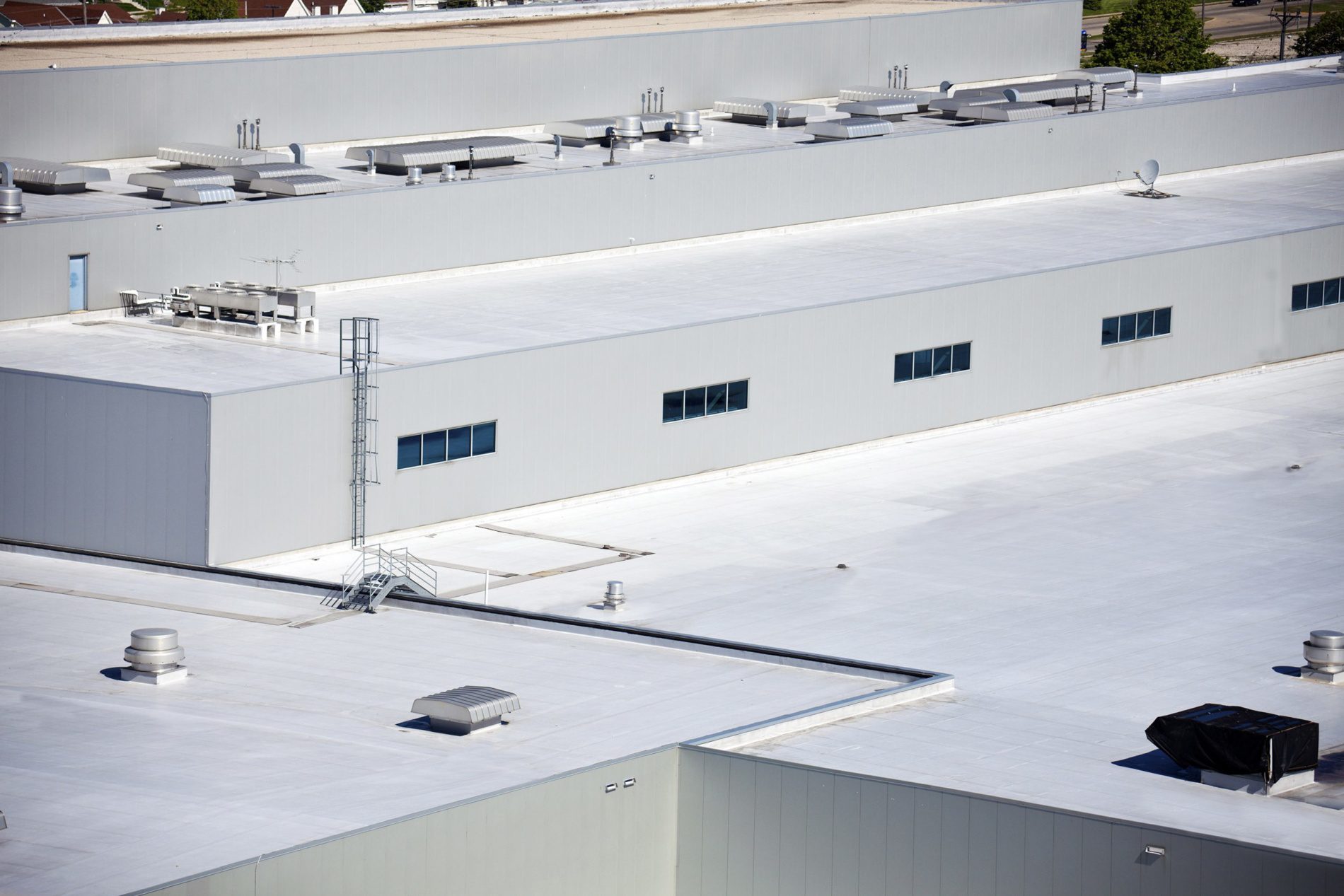
Commercial roofing for manufacturing plants, production facilities, and industrial buildings.
Des Moines sits at the center of one of the most productive agricultural and food processing regions in the world, and its manufacturing sector reflects that geography. Facilities like the Quaker Oats plant — one of the largest cereal manufacturing operations in North America — and the numerous grain processing, seed treatment, and ag-equipment fabrication plants throughout the metro represent the kind of mid-scale industrial manufacturing environment where roofing performance directly affects food safety, operational continuity, and insurance compliance. Commercial roofing for Des Moines manufacturing plants must address the specific demands of food processing environments alongside Iowa's challenging four-season climate.
Food safety is the overriding concern on Des Moines food processing manufacturing roofs. Water intrusion above production areas is not simply a property damage issue — it is a potential food safety event that can trigger product holds, recalls, and regulatory action from the FDA or USDA depending on the facility type. Our roofing assessments for food processing plants include an interior survey of leak history, drain placement relative to production zones, and any areas where water might track to production lines even without a visible leak at the roof level.
Process equipment on Des Moines food processing roofs tends toward large ventilation and dust collection systems, grain elevator equipment, and specialized humidity control units. Grain dust is a particular concern — it accumulates on rooftop surfaces and in drainage systems, and when wet becomes a heavy, acidic paste that degrades membrane surfaces and blocks drainage. We include rooftop debris management recommendations in our preventive maintenance programs for grain and seed processing facilities.
Vibration from large processing equipment — grain conveyors, hammer mills, pelletizers, and packaging machinery — transmits through building structures to roof decks in Des Moines food processing plants. We map high-vibration zones during the assessment phase and apply reinforced flashing and termination details at equipment bases in those zones to prevent fatigue-induced seam failures.
Iowa's freeze-thaw cycle is among the most punishing of any agricultural-belt state. Des Moines averages more than 100 freeze-thaw cycles annually, and manufacturing roofs with inadequate drainage or low-slope areas accumulate ice and water that works into lap seams and flashing terminations over time. We specify tapered insulation systems on re-roofing projects to improve drainage slopes and recommend heated drain inserts at primary drain locations on critical food production facilities.
Chemical exposure on Des Moines ag-processing roofs includes cleaning agents — chlorine-based sanitizers, caustic washes, and acid cleaning compounds are common in food processing environments. These compounds can exhaust through roof-mounted ventilation and contact membrane surfaces in high-concentration zones. We specify membrane materials with documented resistance to the specific sanitizing chemistry used at each facility.
Skylights are common in older Des Moines food processing plants built before LED lighting made natural daylighting less economical. Failed skylights above production areas are a food safety liability and must be addressed promptly. We maintain emergency skylight replacement inventory and offer rapid-response skylight repairs as part of our preventive maintenance program for Des Moines food processing clients.
Load bearing considerations on Des Moines food processing roofs include grain storage areas where elevated loads may have been added over time without structural review. We verify existing structural capacity before specifying insulation upgrades or new equipment curb placements, and we flag any capacity concerns to the structural engineer before project mobilization.
Production schedule coordination for Des Moines food processing plants is governed by USDA inspection schedules, seasonal processing cycles, and the continuous-operation nature of many grain and cereal processing facilities. We offer 24/7 emergency response and scheduled preventive maintenance programs designed around your facility's production calendar.
What to send before the roof walk
Send the roof address, leak photos, roof age if known, access instructions, tenant limits, prior reports, and the deadline driving the decision. That lets the first visit focus on the roof condition instead of chasing basic context.
Questions Owners Ask
Can this work happen while the building is occupied?
Often yes. The scope should cover access, safety, dry-in, staging, noise, interior protection, and the times when tenants or operations cannot be interrupted.
What changes the cost most?
Wet insulation, deck condition, edge metal, layer count, access, roof size, code triggers, weather timing, and the amount of repeated damage usually move the cost.
How is the condition documented?
The roof file should include photos, locations, material notes, observed defects, temporary repairs, remaining deficiencies, and recommended next steps.