
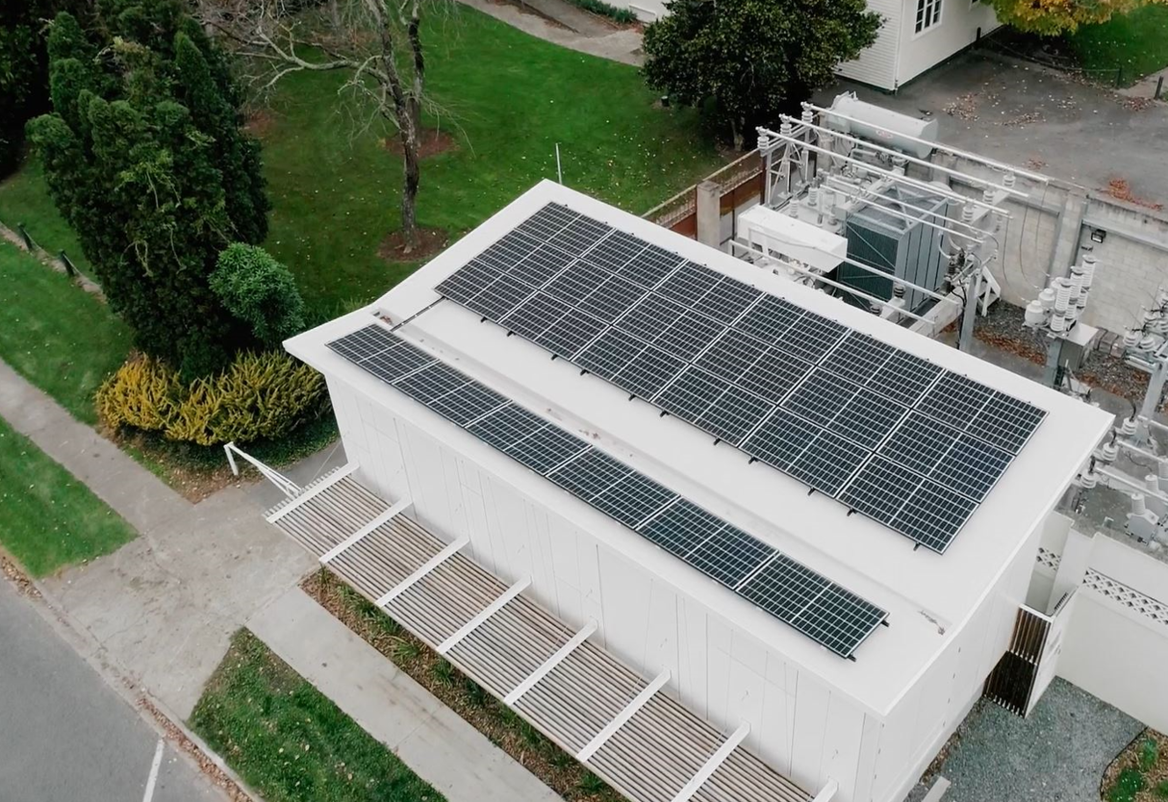
Putting solar on a Des Moines commercial roof the right way
A rooftop array is a thirty-year decision bolted onto a membrane that may have far less life left in it. That mismatch is the single most expensive mistake we see commercial owners make. Before a single panel arrives, we look at the roof underneath it and tell you honestly whether it can carry an array through the full life of the system. Across the warehouses along the SE 14th Street and Army Post Road industrial belt, the office and flex buildings in the Westown Parkway corridor through West Des Moines, and the big-box rooftops near Jordan Creek and Merle Hay, we have seen plenty of solar proposals written as if the roof were brand new when it had eight years left at most.
We are roofers, not a solar sales company, and that is the point. Our job is to make sure the surface your panels sit on is sound, watertight, and warranted before the racking crew shows up, and to keep it that way for the decades the array is expected to run.
Membrane life has to come before module count
The economics are unforgiving. If your roof has fifteen or more documented years of service life remaining, mounting solar on the existing membrane is reasonable. If it has seven years or fewer, you should almost always reroof first. Otherwise, when the membrane finally fails, you pay to detach the entire array, store it, replace the roof, and reset every module and rail. On a mid-size commercial system that detach-and-reset cycle routinely adds tens of thousands of dollars that a little sequencing would have avoided.
We core the assembly, check the existing fasteners and insulation, and give you a written remaining-life estimate. From there the decision is simple math: reroof now and install solar onto a fresh surface, or install on the current roof and accept a future detach cost. We will tell you which one pencils out for your building rather than which one sells more panels.
Racking penetrations and flashing details
Every attachment method touches the roof differently, and each one has to be detailed to survive Iowa freeze-thaw cycles and ponding.
Conduit is the detail most often botched. Runs from the array down to the building's electrical service usually cross the membrane at several points. Conduit fastened flat to the membrane abrades it, and conduit penetrations flashed with a generic boot become chronic leaks. We set the conduit on approved standoffs and flash every roof penetration to the membrane manufacturer's detail before the electrician pulls wire.
Weight, uplift, and the structure below
Solar adds dead load and changes how wind behaves across the roof. Ballasted systems can add several pounds per square foot, and on the older warehouse and manufacturing structures common around the Des Moines River corridor and the East Side rail districts, original design loads were not generous. We confirm the added ballast weight against the building's structural capacity, with a structural engineer's review when the numbers are close.
Uplift matters just as much. Des Moines sits in a part of Iowa that takes real straight-line wind and the occasional severe storm, and an array is a giant set of sails if it is not secured for the local design wind speed. The racking layout, ballast distribution, and any mechanical anchoring all have to meet the wind load the code requires for this site, with extra attention at the roof perimeter and corners where uplift concentrates.
Membrane choice under an array
For new solar roofs we most often specify a white reflective single-ply, typically a 60-mil TPO or PVC. The reflective surface runs cooler under the modules, which helps panel output, and a mechanically attached or fully adhered single-ply gives a clean, durable substrate for racking. Where ballast weight is a concern, a fully adhered system removes the loose-laid weight question. We will match the membrane to the racking method and the structure rather than defaulting to one product.
Warranty coordination between roofer and solar installer
This is where projects quietly go wrong. Most major membrane manufacturers will keep your roof warranty intact under an array, but only if the work follows their rules: approved ballast pads under the racking, approved walk pads for service access, approved penetration details, and in many cases a pre-installation review by the manufacturer's representative. If the solar crew screws racking through the membrane without those steps, the warranty can be voided and you may not find out until the first leak.
We run the manufacturer warranty review, document the penetration and ballast details, and coordinate directly with the solar EPC so the roofing and the array are both covered. We also set the install sequence in writing: membrane installed and inspected first, conduit penetrations flashed by us, then racking and modules, then a joint final walk for both warranties.
How we work alongside your solar contractor
Common questions about solar roof integration
Should we reroof before installing solar or mount it on the existing roof?
It depends on remaining membrane life. With fifteen-plus years left, installing on the existing roof is fine. With seven or fewer, reroof first. The cost of detaching and resetting an array during a future reroof almost always exceeds the cost of reroofing now and going solar immediately after. We give you the service-life number so the decision is based on the actual roof, not a guess.
Do the panels require holes in the roof?
Not always. Ballasted racking holds the array down with weighted blocks and avoids most penetrations, which is common on low-slope roofs in Des Moines. Penetration-anchored and hybrid systems do drive fasteners through the membrane, and when they do, every attachment is flashed individually to the manufacturer's spec and covered under the roof warranty.
Will adding solar void our roof warranty?
Only if the work ignores the manufacturer's requirements. Most single-ply manufacturers allow rooftop solar on a warranted system when the design uses approved ballast pads, walk pads, and penetration details and passes a pre-installation review. We handle that review so the array does not put your membrane warranty at risk.
Can our older building carry the extra weight?
That is exactly what we check first. Ballasted systems add real dead load, and many older Des Moines commercial structures were designed to modest loads. We compare the added weight to the building's capacity and bring in a structural engineer when the margin is tight, rather than assuming the roof can take it.
What to send before the roof walk
Send the roof address, leak photos, roof age if known, access instructions, tenant limits, prior reports, and the deadline driving the decision. That lets the first visit focus on the roof condition instead of chasing basic context.
Questions Owners Ask
Can this work happen while the building is occupied?
Often yes. The scope should cover access, safety, dry-in, staging, noise, interior protection, and the times when tenants or operations cannot be interrupted.
What changes the cost most?
Wet insulation, deck condition, edge metal, layer count, access, roof size, code triggers, weather timing, and the amount of repeated damage usually move the cost.
How is the condition documented?
The roof file should include photos, locations, material notes, observed defects, temporary repairs, remaining deficiencies, and recommended next steps.