
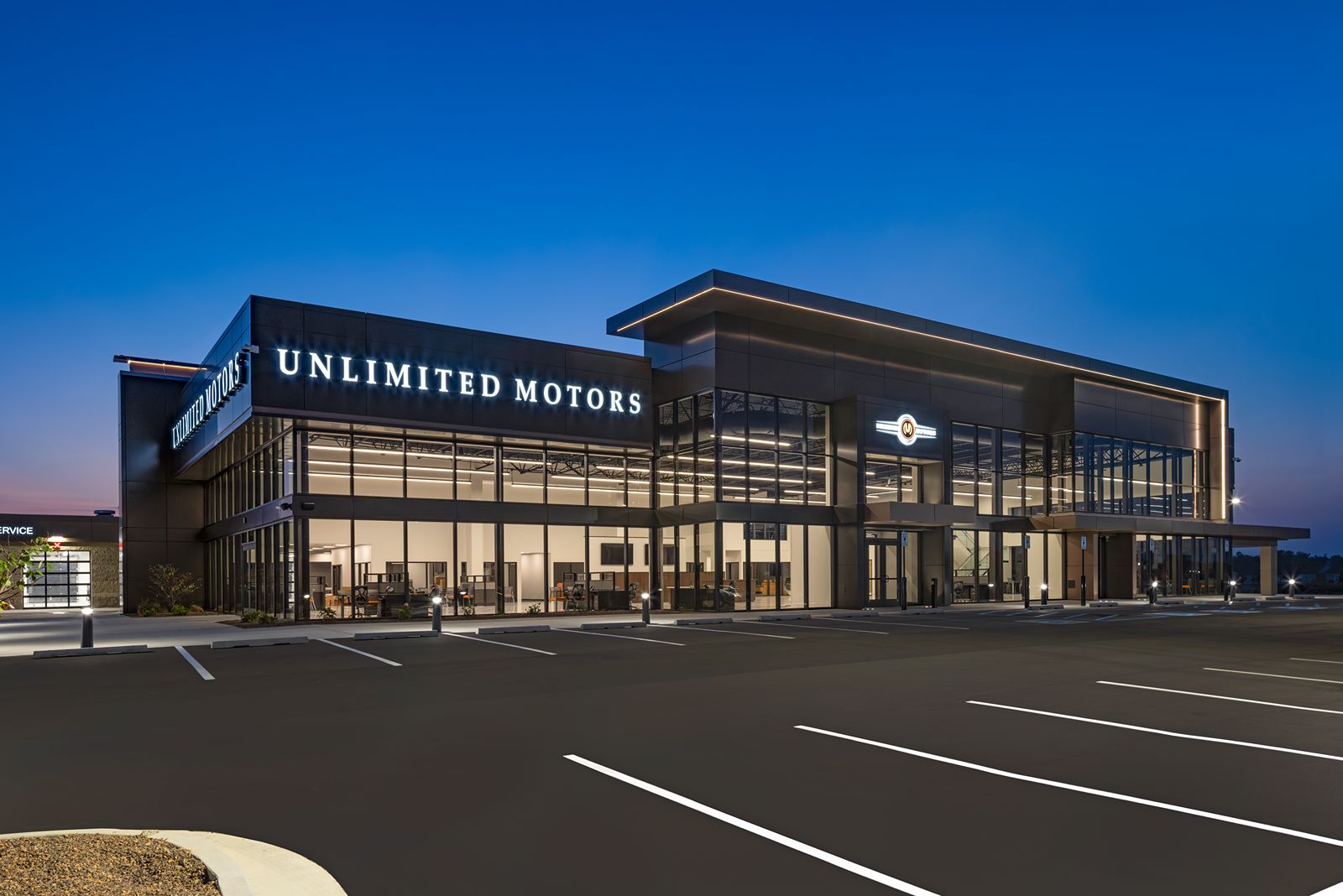
Commercial roofing for auto dealerships, service centers, and automotive retail facilities.
Rydell Automotive Group operates multiple dealership franchises in the Des Moines metro, with locations including a large Ford and Lincoln store that is among the higher-volume franchises in central Iowa. Iowa sits squarely in the Midwest hail belt, and Des Moines dealership operators have learned through experience that hail events are not unusual occurrences requiring extraordinary responses — they are annual seasonal events requiring systematic preparedness. The commercial roofing program for a Des Moines dealership must be designed around the seasonal reality of spring hail, winter freeze-thaw cycling, and the operational constraints of a business that cannot close for roofing work the way a simpler commercial building might.
Hail impacts Des Moines dealership roofing in a direct and costly way. Large flat roof surfaces over showrooms, service buildings, and parts departments receive hail impact across tens of thousands of square feet in a significant event. Membrane damage from hail is often not immediately obvious — the puncture may be small and initially capillary in its water admission — but the cumulative effect of multiple hail seasons on an aging membrane accelerates deterioration to the point where a roof that survived its first decade relatively unscathed begins failing broadly in its second. Proactive membrane inspection following each spring hail season is the practice that separates Des Moines dealers who manage roof costs predictably from those who face emergency repair situations.
Iowa's freeze-thaw cycling through the extended winter season creates ongoing stress for dealership roofing systems. Service buildings have numerous penetrations — overhead door head jamb flashings, compressed air lines, exhaust ventilation, electrical conduit — each of which is a potential freeze-thaw failure point. HVAC equipment curbs on service buildings are particularly vulnerable to flashing fatigue because the thermal differential between the warm equipment exhaust and the cold exterior surface drives rapid cycling of the metal and membrane components at the curb perimeter. Annual inspection of all penetration flashings in early spring — after the last hard freeze — identifies the specific locations where freeze-thaw cycling has opened vulnerabilities that need repair before the next rain season.
Service bay skylights at Des Moines dealerships provide technician productivity benefits that are real and documented — natural light improves work quality and reduces fatigue during long shifts in the service bay. But Iowa's climate is particularly hard on skylights. Spring hail can crack polycarbonate panels; winter freeze-thaw cycles stress curb flashings and gaskets; summer humidity drives condensation on cold surfaces. A skylight maintenance program that inspects all skylights twice per year — once in spring after hail season and once in fall before freeze-up — identifies the small repairs that prevent the large water damage events that occur when skylight failures go unnoticed through a Des Moines winter.
Service drive canopy roofing at Iowa dealerships must address snow load accumulation in addition to the hail and summer rain that southern-climate canopies primarily face. Iowa's winter precipitation, combined with wet spring snow that arrives in March and April, can load canopy structures significantly. Canopy drainage must be maintained to prevent ice dam formation at gutters and downspouts, and the drainage itself must be routed to locations where ice buildup in discharge areas won't create customer slip-and-fall hazards. Working with a contractor who understands Midwest canopy winter performance prevents the drain-back and ice problems that recur annually on poorly designed or maintained systems.
The operational schedule of a high-volume Des Moines dealership makes roofing project planning a coordination exercise. Service departments generating peak revenue run five or six days per week with customer appointments filling the schedule weeks in advance. Showrooms with floor traffic on weekends and evenings can't be closed for roofing work. Parts departments operate during business hours. Experienced Iowa dealership roofing contractors develop detailed project execution plans that sequence work across building sections, use temporary waterproofing at day's end, and schedule the most disruptive phases for weekends and evenings when operational impact is minimized.
Iowa's energy code requirements for commercial roofing reflect the state's significant heating degree day load. Des Moines experiences about 6,500 heating degree days annually — substantially more than southern markets — which drives meaningful energy cost differences between well-insulated and poorly insulated commercial buildings. A service building with three or four overhead doors opening dozens of times per day imposes a substantial heating penalty on each open event, and roof insulation that limits the heat loss through the ceiling envelope reduces the total heating load the HVAC system must address. R-25 to R-30 insulation is appropriate for Des Moines dealership service buildings.
Documentation of roofing system condition and maintenance history is valuable for Des Moines dealerships managing both insurance renewals and OEM facility compliance processes. Insurance carriers increasingly scrutinize commercial roof age and condition in Iowa's hail-prone environment, and OEM auditors may include facility condition assessments in their dealer review processes. A well-maintained roofing program with documented inspection records, repair history, and manufacturer warranty documentation gives facility managers the evidence they need to demonstrate responsible property stewardship in both contexts.
The long-term economics of dealership roofing in Des Moines favor proactive investment over reactive repair. The scenario of discovering major water damage in a finished showroom, a parts department with saturated shelving, or a service bay with corroded electrical conduit following a winter of undetected roof infiltration is the expensive outcome that systematic roof maintenance prevents. For Iowa dealership operators who understand their roofing program as a capital asset management function rather than a maintenance expense category, the return on that investment is predictable and substantial.
What to send before the roof walk
Send the roof address, leak photos, roof age if known, access instructions, tenant limits, prior reports, and the deadline driving the decision. That lets the first visit focus on the roof condition instead of chasing basic context.
Questions Owners Ask
Can this work happen while the building is occupied?
Often yes. The scope should cover access, safety, dry-in, staging, noise, interior protection, and the times when tenants or operations cannot be interrupted.
What changes the cost most?
Wet insulation, deck condition, edge metal, layer count, access, roof size, code triggers, weather timing, and the amount of repeated damage usually move the cost.
How is the condition documented?
The roof file should include photos, locations, material notes, observed defects, temporary repairs, remaining deficiencies, and recommended next steps.