
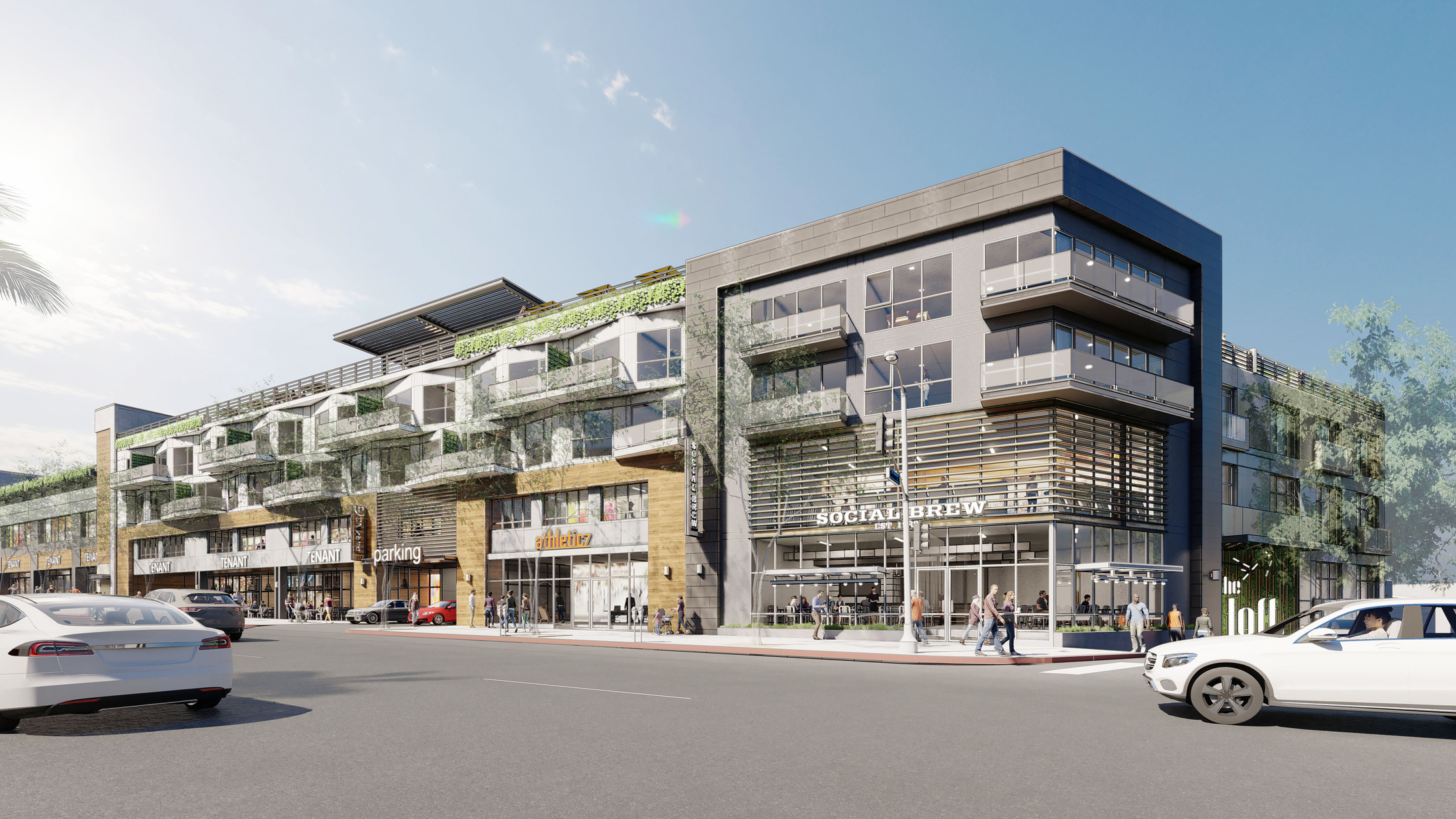
Commercial roofing for mixed-use developments, urban infill projects, and live-work-play buildings.
Des Moines has undergone a substantial urban transformation over the past decade, with the East Village, the Court Avenue entertainment district, the Western Gateway neighborhood, and the Drake University corridor all attracting mixed-use development that has changed the character of the central city. The Principal Financial Group and Wells Fargo anchor downtown employment, and the growing technology and insurance sector workforce has created demand for the walkable, amenity-rich housing that mixed-use development provides. Iowa's capital city is a market where the construction community is large enough to support genuine specialization, and mixed-use roofing is a category that rewards contractors with specific technical experience in the building type.
Des Moines sits squarely in the continental climate zone, with winter temperatures that can drop to minus 20 Fahrenheit and summer temperatures that regularly exceed 90 degrees. This 110-degree-plus annual temperature range creates among the most severe thermal cycling conditions for roofing assemblies in the United States, and mixed-use transition decks must be specified accordingly. The fully adhered TPO or PVC systems that perform best in Des Moines's climate should be installed over continuous insulation of adequate R-value to prevent the cold surface conditions at the deck that drive condensation and freeze-thaw damage in the assembly. Contractors who have completed multiple Des Moines projects understand that the insulation specification is as important as the membrane selection in this climate.
The East Village's concentration of historic buildings—many of them dating to the late 19th and early 20th centuries—creates a renovation landscape where the roof structures are often wood framing systems that were not designed for the loads of modern waterproofing assemblies and mechanical equipment. Before any new rooftop program is specified for an East Village mixed-use renovation, a structural assessment of the existing roof framing is essential to confirm that the proposed dead loads, including the waterproofing assembly, any added insulation thickness, and mechanical equipment, are within the structure's capacity. Polk County's building department has become appropriately thorough in requiring structural documentation for renovation permits on these older buildings following several high-profile cases of inadequate capacity assessment.
Rooftop amenity decks are increasingly common in the newer mixed-use construction in Des Moines's Western Gateway and the Market District neighborhood, where developers are targeting the professional workforce that values outdoor space in a city where the climate limits outdoor enjoyment to a relatively short season. Making this limited season count means designing amenity decks that are fully functional immediately when weather permits, which requires waterproofing and drainage assemblies that can handle the rapid temperature swings and late-season ice that Iowa springs deliver. Heating cables at drains and scuppers, and a drainage composite that maintains water flow beneath frozen paver surfaces, are standard features of a well-designed Des Moines amenity deck.
Coordinating reroofing work in Des Moines's active downtown and East Village mixed-use buildings requires working within a compact urban core where street access, staging, and crane operation are all regulated by the City of Des Moines's transportation and permit offices. The Ingersoll Avenue corridor and the Drake University neighborhood, which have seen significant mixed-use activity in recent years, have somewhat more relaxed logistics environments than downtown proper, but still require advance coordination with neighborhood business associations that have become active participants in managing construction impacts on their commercial corridors. Contractors who engage these associations proactively build goodwill that translates into smoother project execution and community support for future work in the area.
Fire-rated assemblies in Des Moines mixed-use buildings follow Iowa's adoption of the IBC, and the City of Des Moines Development Services Center processes commercial renovation permits with a review team that is familiar with the common mixed-use building types in the central city. Iowa's building code environment is generally consistent with current IBC provisions, and the AHJ's expectations for fire-rating documentation at occupancy separations are well-established. Contractors who work regularly in Des Moines develop an understanding of the Development Services Center's specific documentation format preferences and submission procedures, which streamlines the permit process for both the contractor and the reviewing staff.
Green roofs have been incorporated into several of the newer mixed-use projects in Des Moines's Market District and the Western Gateway corridor, driven partly by the Stormwater Utility's incentive programs and partly by the LEED certification goals of developers building for institutional investors. The City of Des Moines's stormwater management program provides volume retention credit for qualifying green roof installations, which can reduce the required on-site detention volume under the city's post-construction stormwater standards. Iowa's harsh winters require specific growing medium and plant selection to prevent freeze damage to the system, and the design should account for the weight of saturated growing medium in spring after snowmelt rather than just the dry weight used in summer design calculations.
Long-term maintenance in Des Moines's mixed-use building portfolio must account for the specific damage patterns of a continental climate: winter snow loading at parapet transitions, freeze-thaw cycling at flashing terminations and lap seals, and the spring rain events that reveal failures that developed during the winter but were masked by frozen conditions. A late-winter inspection before the spring rain season begins—typically in early March—allows contractors to identify and repair winter damage before it admits water to the building interior. Fall inspections in October, timed to confirm drainage capacity and flashing condition before the first significant snow, complete the two-inspection annual program that Des Moines conditions demand.
Des Moines's continued development of the River Bend neighborhood, the Ingersoll corridor's ongoing densification, and the planning for transit-supportive development along the Fleur Drive corridor all create a sustained pipeline of mixed-use construction and renovation work. The Iowa Economic Development Authority's programs for downtown revitalization and historic preservation tax credits have attracted capital to building types and locations that might otherwise not support new investment, and the resulting development activity generates roofing work across a range of building ages and conditions. Contractors who understand the incentive landscape—including the historic tax credit documentation requirements that affect renovation scope decisions—can serve their clients as informed advisors rather than simply as installers.
What to send before the roof walk
Send the roof address, leak photos, roof age if known, access instructions, tenant limits, prior reports, and the deadline driving the decision. That lets the first visit focus on the roof condition instead of chasing basic context.
Questions Owners Ask
Can this work happen while the building is occupied?
Often yes. The scope should cover access, safety, dry-in, staging, noise, interior protection, and the times when tenants or operations cannot be interrupted.
What changes the cost most?
Wet insulation, deck condition, edge metal, layer count, access, roof size, code triggers, weather timing, and the amount of repeated damage usually move the cost.
How is the condition documented?
The roof file should include photos, locations, material notes, observed defects, temporary repairs, remaining deficiencies, and recommended next steps.