
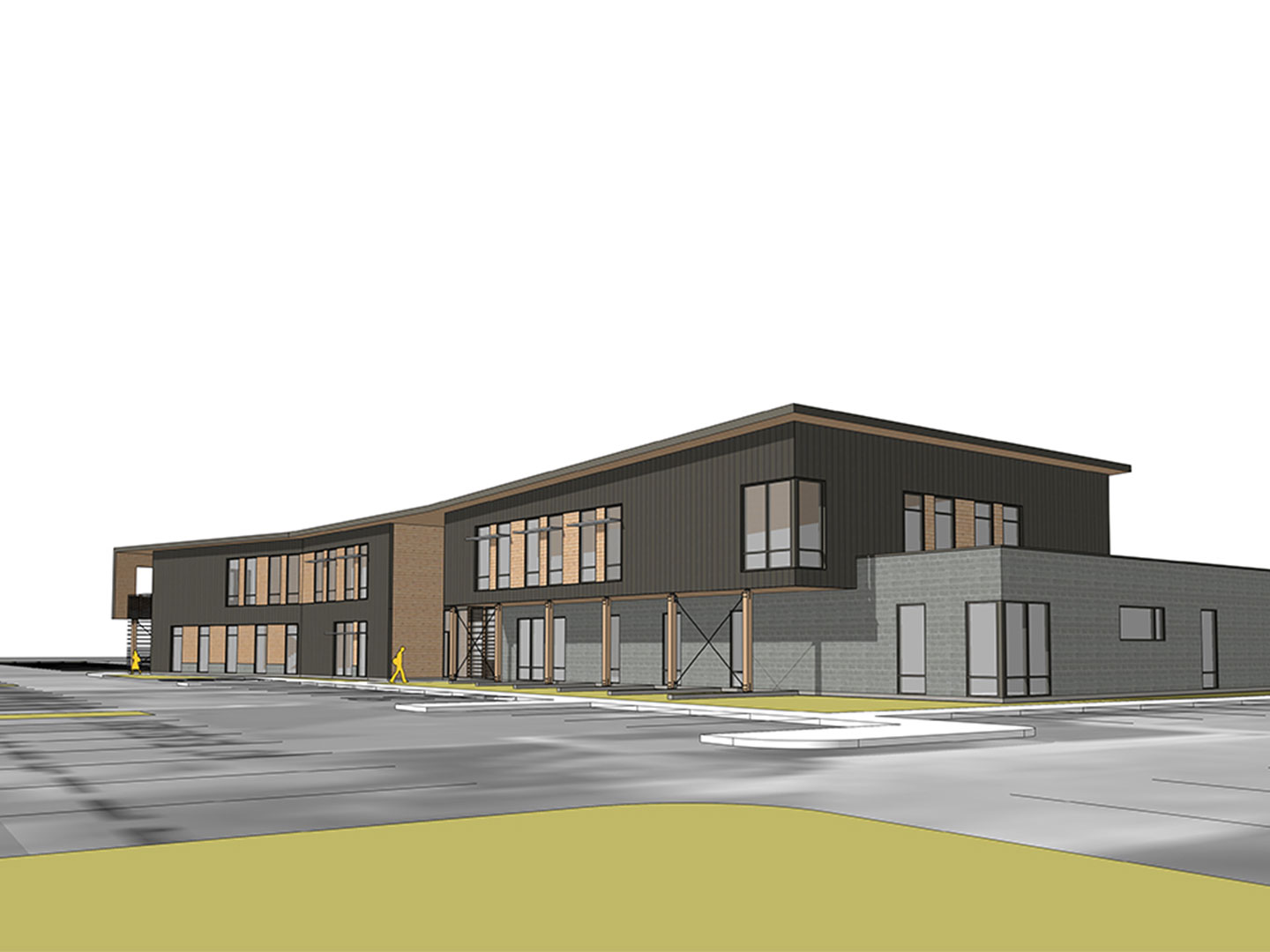
Commercial roofing for hospitals, medical offices, clinics, and healthcare facilities.
Des Moines has quietly become one of the Midwest's most active healthcare construction markets, with UnityPoint Health, MercyOne, and the Iowa Health System all executing significant capital projects across Polk County and the surrounding metro. The Iowa Methodist Medical Center campus near downtown has seen repeated expansions, and newer suburban campuses in Ankeny, Waukee, and Johnston are adding surgical centers, imaging facilities, and ambulatory care buildings at a steady pace. Each of these structures depends on a roofing system capable of protecting sterile environments, housing dense mechanical equipment, and performing reliably through Iowa's full range of severe weather conditions—often within the same calendar month.
Iowa weather is relentless in its variety and its ability to test building envelopes. Des Moines experiences everything from February ice storms that load roofs with freezing rain to June tornado-watch afternoons followed by golf-ball hail. The prolonged freeze-thaw cycles that characterize Iowa springs are particularly punishing for roofing systems on medical buildings where drainage pathways become clogged with debris from deciduous trees common throughout the metro. When MercyOne Des Moines or any of the affiliated outpatient clinics across the metro allow water to pond on low-slope roofs, the membrane ages at an accelerated rate and seams begin failing—often directly above sensitive spaces like pharmacy clean rooms or imaging suites where water intrusion cannot be tolerated under any circumstances.
The roofing challenges at a major Iowa hospital are fundamentally different from those at a conventional commercial building because of what hospitals put on and through their roofs. Large medical complexes like the Iowa Lutheran Hospital campus carry rooftop mechanical equipment that would overwhelm a typical office building's structural design—multi-ton air handling units, cooling towers, medical gas venting stacks, emergency generator exhaust, and kitchen and laundry exhaust systems all require custom-engineered curbs, counterflashing, and drainage details. Contractors servicing these facilities must read mechanical as-builts carefully before specifying any re-roofing system because the equipment access paths, service clearances, and load distribution patterns differ from building to building even within the same hospital network.
Infection control requirements at Des Moines healthcare facilities mirror the national standards set by the American Institute of Architects Guidelines for Design and Construction of Hospitals and the Joint Commission's environment of care standards. Any roofing contractor working above occupied patient areas at UnityPoint facilities or MercyOne campuses must implement a formal Infection Control Risk Assessment plan before breaking ground. In practical terms, this means constructing sealed pathway barriers between roofing activity and any HVAC air intake within contamination range, using negative air pressure containment where ceiling tiles must be removed for drain access, and briefing roofing crews on the specific isolation procedures required for that building's layout. Des Moines facilities managers enforce these requirements stringently because an ICRA failure during a Joint Commission survey can trigger a facilities-level deficiency citation.
Assisted living and memory care facilities in the Des Moines metro—including the numerous Sunrise Senior Living, Brookdale, and locally operated communities in Clive, Windsor Heights, and Urbandale—require the same attention to continuous occupancy and infection prevention that acute-care hospitals demand. State licensing through the Iowa Department of Inspections and Appeals governs roofing-related construction activities at licensed care facilities, and operators face significant regulatory exposure if a roofing contractor disturbs asbestos-containing materials without proper abatement protocols in older buildings. Many Des Moines area senior campuses were built in the 1970s and 1980s, meaning that any roofing project must begin with a comprehensive hazardous material survey before any demo work starts.
The surgical centers and urgent care clinics that have expanded aggressively across the Des Moines metro in the past five years present a different profile of roofing risk than large hospital campuses. Freestanding ambulatory surgical centers operated by Iowa Ortho, Des Moines Surgical Associates, and hospital system joint ventures often occupy single-story or two-story purpose-built structures where roofing failures translate almost immediately into visible ceiling damage in corridors and procedure rooms. These buildings typically lack the redundant drain systems found on large hospital campuses, making preventive maintenance—semi-annual drain clearing, annual sealant inspection at all penetrations, and post-storm debris removal—an absolute operational priority rather than a line item to defer.
TPO membrane systems have become the dominant roofing product for new healthcare construction in the Des Moines market, prized for their heat-weldable seams, reflectivity benefits that reduce cooling loads in Iowa summers, and compatibility with the heavy equipment curb configurations typical of medical buildings. However, TPO on a hospital roof demands more precise quality control than on a retail or office project—welding temperatures must be monitored carefully because variations that would merely produce a cosmetic blemish on a warehouse roof can create an invisible but structurally compromised seam on a hospital, where the stakes of a later failure are vastly higher. Manufacturers like Carlisle, Firestone, and GAF offer healthcare-specific warranty language for facilities that use qualified roofing contractors and document the installation to prescribed standards.
Preventive maintenance contracts for Des Moines healthcare facilities should specify inspection protocols calibrated to Iowa's climate cycles. The optimal inspection timing for facilities along the Highway 69 and Interstate 80 corridors places one visit in late October after leaf-fall has clogged roof drains and a second visit in April to assess freeze-thaw damage before summer convective storm season begins. Infrared thermography during the autumn visit allows detection of wet insulation before it causes visible damage or mold growth—a particularly important service for older hospital buildings that may have decades of layered re-roofing with multiple vapor barrier configurations. Early detection consistently costs a fraction of what emergency repairs or insulation replacement projects run when problems are allowed to advance.
Healthcare facilities managers in Des Moines are best served by roofing contractors who can demonstrate a complete understanding of the regulatory and operational environment unique to medical buildings. That means ICRA training documentation for all field personnel, evidence of completed projects at accredited hospitals or licensed care facilities, familiarity with Iowa's healthcare construction licensing requirements, and the project management infrastructure to coordinate with hospital engineering departments on phased work plans. The Des Moines healthcare real estate market is expanding rapidly, and roofing quality is one of the foundational decisions that determines whether a new or renovated medical facility performs reliably for its intended thirty-year service life.
What to send before the roof walk
Send the roof address, leak photos, roof age if known, access instructions, tenant limits, prior reports, and the deadline driving the decision. That lets the first visit focus on the roof condition instead of chasing basic context.
Questions Owners Ask
Can this work happen while the building is occupied?
Often yes. The scope should cover access, safety, dry-in, staging, noise, interior protection, and the times when tenants or operations cannot be interrupted.
What changes the cost most?
Wet insulation, deck condition, edge metal, layer count, access, roof size, code triggers, weather timing, and the amount of repeated damage usually move the cost.
How is the condition documented?
The roof file should include photos, locations, material notes, observed defects, temporary repairs, remaining deficiencies, and recommended next steps.