
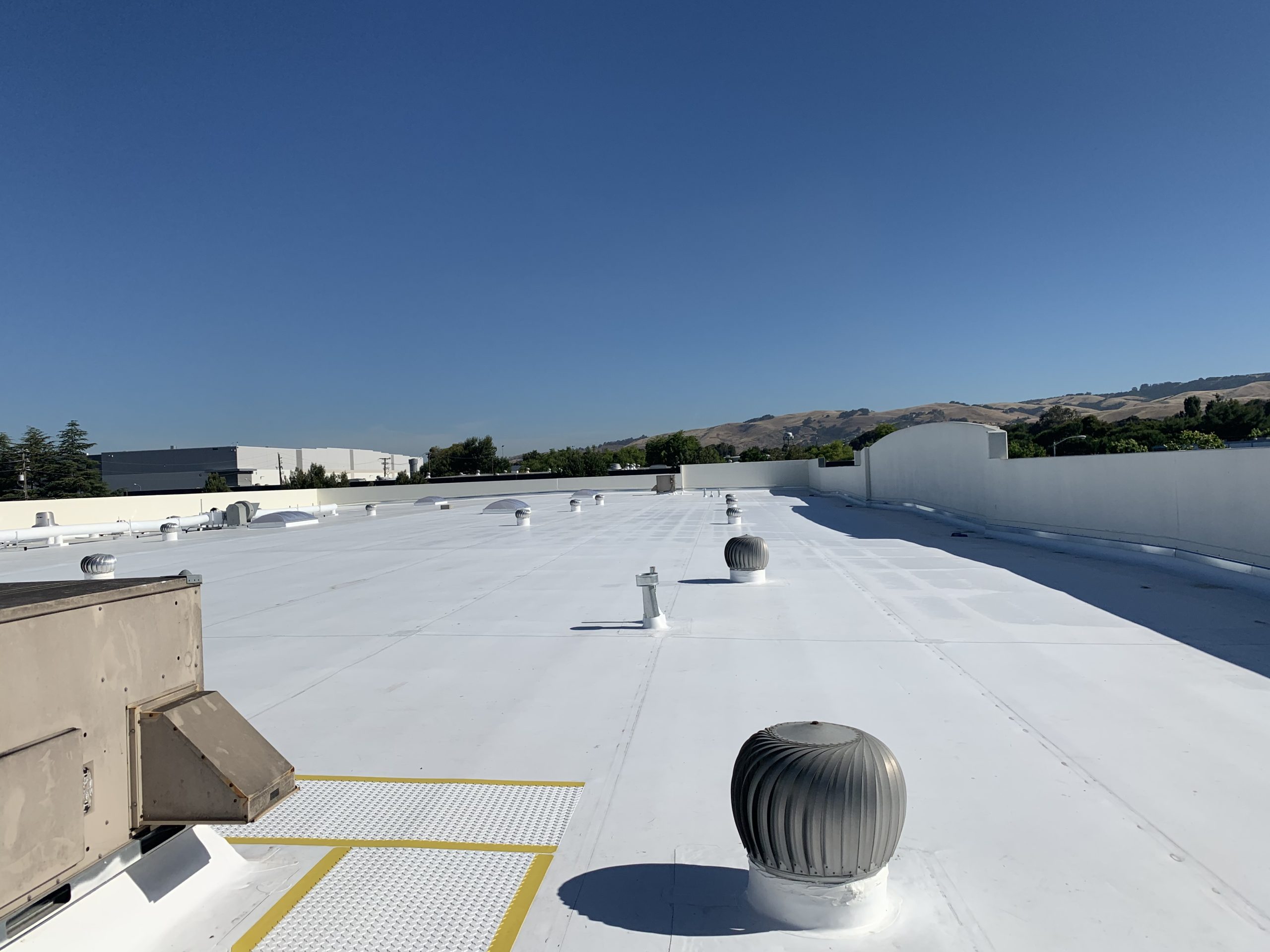
Washdown humidity below, heavy refrigeration loads above, and a sanitation window that controls the whole schedule — food plant roofing scoped for how production actually runs.
A Plant Where the Roof Answers to the Food Safety Plan
On a food processing roof, the membrane is only part of the job. What governs the work is the food safety plan: a leak over an active line is not a maintenance ticket, it is a potential contamination event that puts product on hold and pulls in the quality team and a regulator. We scope food plant roofing to keep that from happening in the first place, which means understanding the regulatory framework, the production rhythm, and the refrigeration loads before we ever talk membrane.
Greater Des Moines is genuinely a food-and-ag processing town, and the building stock shows it. Meat and protein processing, grain and ingredient handling, dairy and bakery operations, and cold-chain distribution sit across the southeast-side industrial corridor, the Pleasant Hill and Bondurant logistics zones, and the plants strung along the I-35 corridor through Ankeny and up toward the agribusiness footprint that ties this region to the broader Iowa food economy. These are working plants with thin access windows and serious rooftop loads, and the roof has to respect both.
Sanitation crews wash these floors down hard, and that warm, saturated air rises straight into the roof assembly. Combined with Iowa's cold winters, that interior humidity meets a cold deck and condenses inside the assembly — the same vapor-drive problem cold storage faces, hiding above an active production floor where nobody is looking for it. We design the vapor control and assembly around the actual interior conditions, not a generic spec, because this is where food plant roofs rot from the inside without ever showing a surface leak.
Refrigeration and rooftop loads from above
Freezer rooms, chill rooms, and blast-freezing areas carry heavy rooftop refrigeration equipment and demand thermal continuity in the assembly above them. Ponding over a freezer adds refrigeration load and accelerates deck corrosion at the same time. We use tapered insulation to drive water to drains and scuppers and design the assembly around the operating temperatures of the spaces below, so the cold chain and the roof are not working against each other.
Material Selection Starts With What Is Allowed
Not every roofing material is acceptable over a food production environment. The membrane, and just as importantly the adhesives, primers, and sealants in the flashing details, have to be confirmed acceptable under the facility's food safety plan before they go on. Many standard roofing adhesives are solvent-based and are not appropriate over food-contact areas. We identify the regulatory framework that applies to your plant and confirm material acceptability with your QA team rather than assuming a product is cleared.
The Sanitation Window Drives the Schedule
Most Des Moines food plants run two or three shifts with a weekly sanitation window as the only real opening when the production floor is down. Any work that opens the envelope above an active production area happens in that window, with the production team and QA manager confirming the floor is clean and protected before the crew starts. We phase the project around the production calendar, not the other way around, and we coordinate with the refrigeration maintenance team on anything that could touch coils or condensing units and disturb the cold chain.
When Something Goes Wrong Over a Live Line
A leak over running production needs an immediate call to QA and facilities for a product-hold evaluation and documentation, not a roofer poking around on his own schedule. Our emergency response for food plants includes 24-hour contact, priority mobilization for a temporary dry-in, and documentation support for the plant's incident reporting. Roof condition is also a standard item in USDA and FDA inspections, so we provide condition records and repair history that your QA manager can put in front of an inspector to show the roof is being managed, not neglected.
What We Handle on Food Processing Roofs
Food Processing Facility Roofing Questions
No. In USDA- and FDA-regulated plants, the membrane and the adhesives, primers, and sealants used in flashing all have to be confirmed acceptable for use over food production before installation, and that is not a universal yes across every product. We identify the framework that applies to your plant and confirm acceptability with your QA team before specifying anything over a food-contact zone.
We build the schedule around your weekly sanitation window and any planned shutdowns, since those are usually the only times the floor under the work is down. Anything that opens the envelope above an active area waits for that window, with the production and QA teams confirming the floor is clean and protected first. Work above refrigerated areas also gets coordinated with the refrigeration maintenance team.
Ponding over a refrigerated space adds load to the refrigeration system and speeds up deck corrosion, so it is worth correcting. We use tapered insulation to drive water to perimeter scuppers or interior drains at the low point of each bay and design the assembly around the operating temperatures of the spaces below.
It gets treated as a potential food-safety event, not a routine repair. The first call is to your QA and facilities team for a product-hold evaluation and documentation. Our emergency response includes 24-hour contact, priority mobilization for a temporary dry-in, and documentation support for your incident reporting.
Yes. Roof condition is a standard inspection item, and inspectors look for leaks, condensation, or deterioration over production areas. We provide condition documentation and repair records your QA manager can produce during an inspection to show the roof is being proactively maintained.
What to send before the roof walk
Send the roof address, leak photos, roof age if known, access instructions, tenant limits, prior reports, and the deadline driving the decision. That lets the first visit focus on the roof condition instead of chasing basic context.
Questions Owners Ask
Can this work happen while the building is occupied?
Often yes. The scope should cover access, safety, dry-in, staging, noise, interior protection, and the times when tenants or operations cannot be interrupted.
What changes the cost most?
Wet insulation, deck condition, edge metal, layer count, access, roof size, code triggers, weather timing, and the amount of repeated damage usually move the cost.
How is the condition documented?
The roof file should include photos, locations, material notes, observed defects, temporary repairs, remaining deficiencies, and recommended next steps.
Related Roof Work
Museum Cultural Facility Roofing