
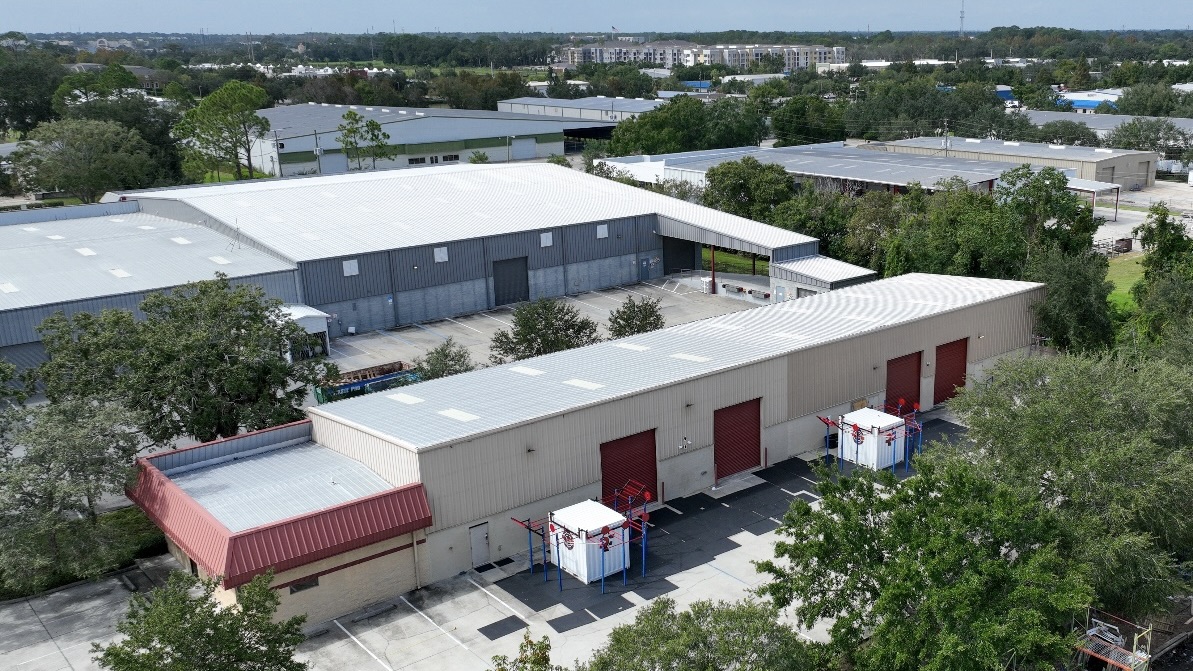
Tunnel humidity, detergent vapor, and a roof deck that gets attacked from below — car wash roofing built for how these buildings actually run.
A Building That Fights Its Own Roof From the Inside
A car wash is one of the few commercial buildings where the most aggressive moisture load comes from inside, not from the sky. Hot water, steam, and a continuous fog of detergents, drying agents, and rust inhibitors fill the tunnel during every cycle and rise straight to the underside of the deck. On a steel deck that means corrosion working up at the fasteners and seams long before anyone sees a stain on a ceiling tile. We approach a Des Moines car wash roof as a vapor-control problem first and a weather problem second, because that is the order in which these roofs actually fail.
The wash corridor in this market runs along the routes drivers use every day. Express tunnels and in-bay sites cluster on Merle Hay Road, along Douglas Avenue and Hickman Road through Urbandale and Windsor Heights, on University Avenue and Ashworth Road in West Des Moines and Clive, and at the high-turnover commuter intersections feeding I-35 and I-80. Iowa's freeze-thaw winters add a second problem on top of the humidity: warm, saturated tunnel air meets a cold deck, condenses, and freezes inside the assembly. A roof that was specified like a strip-mall retail box will not survive that cycle, and we see the proof on tear-offs every season.
Where Car Wash Roofs Break Down
The roof directly over the active wash equipment takes the worst of it. Alkaline detergents and wax compounds become airborne, settle on the underside and the topside, and chew through membranes and flashings that were never tested for chemical contact. EPDM and TPO both lose ground to that exposure over time, which is why we usually specify a 60-mil PVC membrane over the tunnel — its plasticizer chemistry holds up to the detergent program far better. Before we commit to anything, we want to know the actual chemical menu the operator runs, because a presoak-heavy acid wash and a wax-heavy package stress the membrane in different ways.
High-volume blowers and exhaust fans pull steam and vapor out of the tunnel through the roof, and those penetrations move a lot of warm, wet, chemically loaded air. Standard curb flashing details do not hold up here. We oversize the curbs, detail every penetration as its own item, and match the flashing to the equipment and the airflow rather than reusing a generic boot.
The vacuum and customer canopies
The free-standing vacuum canopies and the entry and exit canopies are usually metal or EPDM-clad and live a separate life — tire-dressing overspray, exhaust, UV, and constant thermal movement. On Des Moines express sites the canopy-to-building transition and the canopy drain tie-ins are the single most common chronic leak we find. They need their own inspection and their own detailing, not an afterthought tacked onto the main building scope.
Matching the Scope to the Wash Type
No two car wash formats carry the same roof scope. A full-menu express tunnel has the most punishing vapor and chemical load. In-bay automatics and self-serve bays run lighter on airborne chemistry but tend to have drainage problems that let water pond over the equipment bays, and ponding over a humid interior is exactly where deck corrosion accelerates. We check drainage and slope on every car wash roof we walk, because correcting a ponding condition with tapered insulation often does more for service life than the membrane choice alone.
Des Moines car washes run seven days a week through most of the year, and the busiest days are often the worst weather days. We sequence around that. Tunnel and bay roof work is staged for the early-morning or after-close window so the equipment is down and the interior is protected, while exterior building, vacuum-canopy, and entrance-canopy work can usually proceed during operating hours with traffic control that keeps cars clear of the crew. Each section is dried in before we leave it, so a stalled day never means an open roof over running equipment.
What We Cover on a Car Wash Roof
For the tunnel and wash-bay zone we usually specify a 60-mil PVC membrane, fully adhered or fleece-back. PVC stands up to the alkaline detergents and wax compounds in a commercial wash far better than TPO or EPDM, and a fully adhered installation removes the seam and fastener stress that tunnel air pressure puts on a mechanically attached system. For the dry side of the building — equipment room, lobby, vacuum canopy — a standard single-ply attached system is usually fine.
They can. Most single-ply warranties exclude chemical exposure by default, so before we specify anything over a tunnel we confirm with the manufacturer that your specific chemical program is compatible with the membrane and that the warranty will hold under those conditions. Some manufacturers offer chemical-exposure or car-wash-specific warranties, and we pursue those where they apply.
The blowers and exhaust fans move warm, wet, chemically loaded air through the roof, so we treat each penetration individually — oversized curbs and flashing details matched to the equipment and the airflow rather than a stock boot. Generic curb flashing is the most common point of early failure on a car wash, and detailing it correctly the first time is the difference between a five-year and a twenty-year roof in that zone.
Yes, with sequencing. Most Des Moines washes run seven days a week, so we schedule tunnel and bay work for the early-morning or after-close window when the equipment is down, and we keep exterior building and canopy work in operating hours with traffic control. Every section is watertight before we leave it.
Yes. The vacuum canopies, the entry and exit canopies, and the transitions where they tie into the main building are all part of how we scope a car wash roof. Those canopy connections and drain tie-ins are where we find most chronic leaks, so they get their own inspection and detailing.
What to send before the roof walk
Send the roof address, leak photos, roof age if known, access instructions, tenant limits, prior reports, and the deadline driving the decision. That lets the first visit focus on the roof condition instead of chasing basic context.
Questions Owners Ask
Can this work happen while the building is occupied?
Often yes. The scope should cover access, safety, dry-in, staging, noise, interior protection, and the times when tenants or operations cannot be interrupted.
What changes the cost most?
Wet insulation, deck condition, edge metal, layer count, access, roof size, code triggers, weather timing, and the amount of repeated damage usually move the cost.
How is the condition documented?
The roof file should include photos, locations, material notes, observed defects, temporary repairs, remaining deficiencies, and recommended next steps.