
Commercial Real Estate and REITs scopes are written for asset teams tracking roof risk across portfolios.
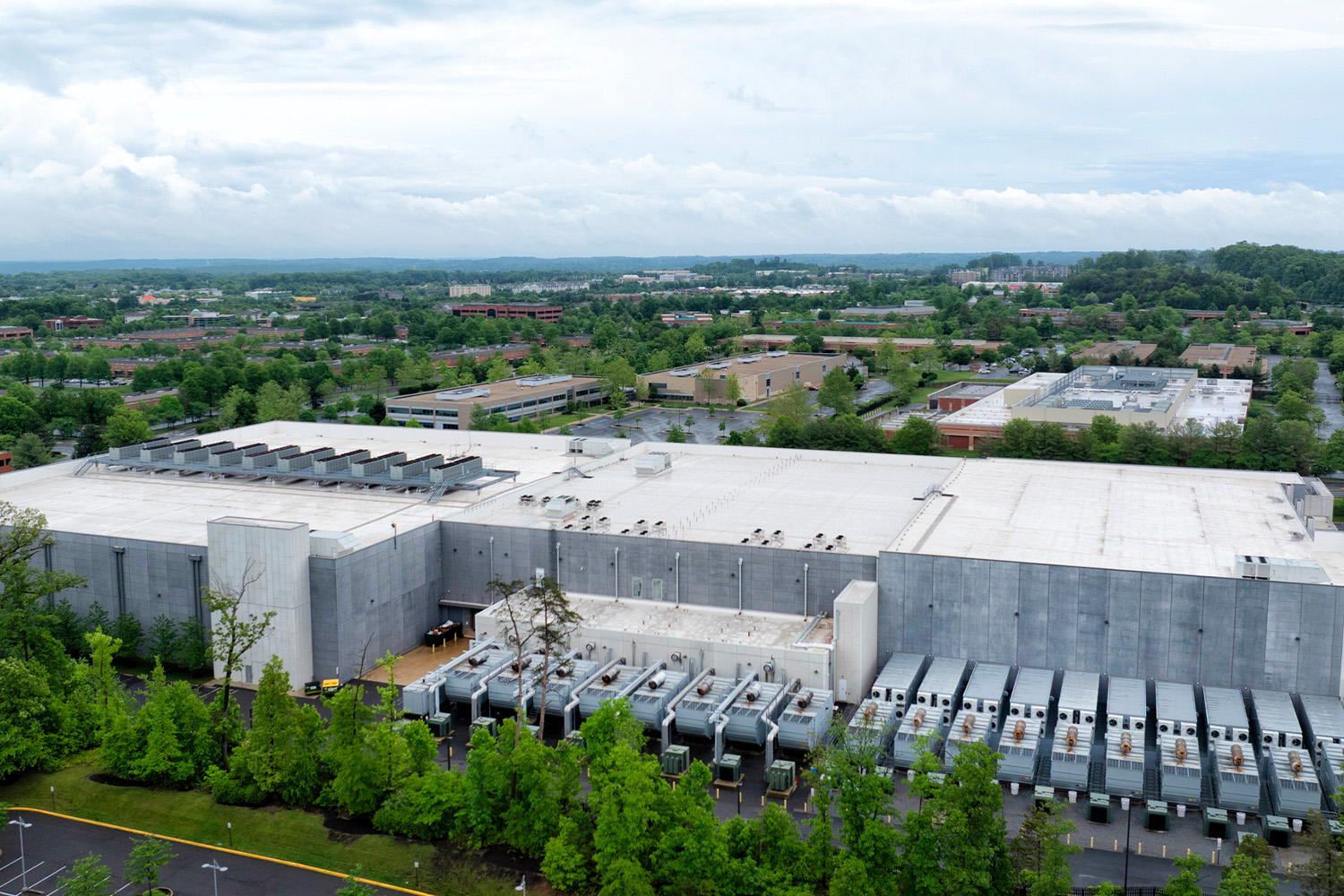
Des Moines has quietly become one of the most important data center cities in the United States, and the commercial roofing demands that come with that growth are unlike those of any other building type in the metro. Microsoft's massive hyperscale campus in West Des Moines spans millions of square feet of server infrastructure, and nearby Council Bluffs hosts Google's enormous data center complex just across the Missouri River. These facilities place extraordinary demands on every component of the building envelope — roofing chief among them. A data center roof must perform flawlessly under continuous mechanical load while providing the thermal stability that precision computing equipment requires. Commercial roofing contractors serving the Des Moines market have had to expand their technical capabilities significantly to keep pace with the region's explosive digital infrastructure growth.
Iowa's renewable energy advantage has made it a magnet for hyperscale operators. The state routinely generates more wind power than it consumes, and data center developers have seized on that green energy profile to meet corporate sustainability commitments. But the same open, flat Iowa landscape that makes wind energy cheap also means roofing systems face persistent high-wind uplift pressure year-round. Des Moines sits in a transitional climate zone where winter ice storms, spring hail events, and summer thunderstorms all stress roofing membranes in distinct ways. A roof that performs well through June's severe storm season must also handle the freeze-thaw cycling that comes with January temperatures regularly dropping below zero. For large-footprint data centers, that means specifying roofing systems tested to FM 1-90 or higher wind uplift ratings and selecting membranes with proven cold-weather flexibility.
The mechanical load profile of a data center roof in Des Moines is unlike that of a warehouse or office building. Cooling infrastructure is the dominant concern. Hyperscale facilities in the West Des Moines and Altoona corridors run massive rooftop cooling towers, precision air handling units, and condensing equipment across roof fields that can stretch for several acres. Each equipment pad creates a concentrated dead load point, and the conduit, refrigerant piping, and electrical runs connecting those units create penetration and walkway demands that a standard commercial roof isn't designed to absorb. Experienced roofing contractors in this market have learned to work closely with mechanical engineers during design to ensure that penetration layouts, equipment curbs, and walkway pad placement are integrated into the roofing system from the start rather than retrofitted after installation.
TPO and EPDM single-ply membranes are the dominant roofing materials specified for Des Moines data centers, though each has a distinct application logic. TPO's heat-welded seams deliver superior puncture resistance and are well-suited to facilities where maintenance crews are regularly accessing the roof to service cooling equipment. EPDM's track record in extreme cold makes it a strong choice for buildings where winter flexibility is the top concern. Some of the larger Microsoft West Des Moines buildings have specified hybrid assemblies — EPDM on lower-slope sections near equipment concentrations, TPO on primary field areas — to optimize performance by zone. Regardless of membrane choice, data center roofs in this market typically require a minimum R-30 continuous insulation assembly to meet both energy code and the thermal stability demands of server rooms beneath.
Vapor management is a non-negotiable design consideration for Des Moines data center roofing. Iowa's continental climate produces high outdoor humidity in summer and extremely dry, cold air in winter, creating strong vapor drive forces that reverse seasonally. Data centers compound this challenge because the interior environment is tightly controlled for equipment protection, typically held at consistent temperature and humidity regardless of outdoor conditions. Without a properly designed and installed vapor retarder, moisture can accumulate within the insulation assembly over multiple seasons, degrading thermal performance and eventually compromising structural roof deck integrity. Specifying a vapor retarder on the warm side of the insulation layer and ensuring that it is carried continuously across all penetrations and transitions is standard practice for any well-designed data center roof in this climate.
Rooftop photovoltaic integration is an emerging topic at Des Moines data centers, driven by corporate renewable energy commitments. Google and Microsoft have both made public pledges to power their data centers with 100% renewable electricity, and rooftop solar is one component of that strategy for facilities where land area allows. Installing solar arrays on an occupied data center roof requires careful coordination between the roofing contractor, the PV installer, and the building owner. Ballasted racking systems eliminate most roof penetrations but add significant dead load; penetrating systems reduce weight but require flashing details that must be maintained over a 25-30 year panel lifespan. The roofing contractor must be involved in racking layout decisions to ensure that drainage patterns are not disrupted and that roof membrane warranty terms are preserved.
The Google Council Bluffs campus, while technically across the state line in Nebraska, draws directly on the Des Moines commercial roofing labor market. Contractors maintaining facilities on that campus must be familiar with Nebraska's wind and hail exposure zones, which differ slightly from central Iowa's, as well as the specific roofing specifications that Google has standardized across its North American portfolio. Large hyperscale operators like Google and Microsoft increasingly require contractors to participate in facility-specific approved vendor programs, complete data center-specific safety training, and carry higher liability coverage than standard commercial work demands. Building relationships with these facility management teams before a re-roofing or repair contract becomes urgent is essential for Des Moines roofing contractors who want to serve this market long-term.
Preventive maintenance programs are more critical for data center roofs than for almost any other building type. A roof leak in a warehouse delays a shipment; a roof leak in a data center can damage computing equipment worth tens of millions of dollars, trigger SLA penalties, and compromise the redundant systems that operators have spent heavily to build. Leading roofing contractors in the Des Moines market offer quarterly inspection programs for data center clients that include infrared scanning to detect moisture intrusion before it becomes visible, drone-based assessment of field membrane conditions, and detailed reporting that integrates with facility maintenance management systems. Operators who invest in a structured preventive maintenance program consistently experience lower total roof lifecycle costs than those who defer maintenance until a repair becomes unavoidable.
The future of data center roofing in Des Moines is tied directly to the ongoing expansion of hyperscale infrastructure in the metro. Microsoft has announced continued phases of its West Des Moines campus, and the utility infrastructure buildout underway to serve those facilities suggests that additional large-scale operators will follow. For commercial roofing contractors in the region, investing in data center roofing expertise — including FM-rated system training, coordination with mechanical engineers, vapor design knowledge, and familiarity with major operators' specification standards — is one of the clearest paths to high-value, long-term project work in the Des Moines market.
What to send before the roof walk
Send the roof address, leak photos, roof age if known, access instructions, tenant limits, prior reports, and the deadline driving the decision. That lets the first visit focus on the roof condition instead of chasing basic context.
Questions Owners Ask
Can this work happen while the building is occupied?
Often yes. The scope should cover access, safety, dry-in, staging, noise, interior protection, and the times when tenants or operations cannot be interrupted.
What changes the cost most?
Wet insulation, deck condition, edge metal, layer count, access, roof size, code triggers, weather timing, and the amount of repeated damage usually move the cost.
How is the condition documented?
The roof file should include photos, locations, material notes, observed defects, temporary repairs, remaining deficiencies, and recommended next steps.